Restricted License Insurance — South Dakota
Free to compare
Circuit Court Controls Your Restricted License — Not the DMV
You expected to walk into a South Dakota DMV office and apply for a restricted license like you'd renew a registration. That's not how South Dakota works. Under SDCL 32-12-53, restricted driving privileges are granted by circuit court petition — not through a DMV administrative process. The circuit court has full discretion to approve or deny your petition, set the specific hours you can drive, and attach conditions including ignition interlock device installation.
Most drivers discover this only after calling the DMV and being told to contact an attorney or file court paperwork themselves. The restricted license you're searching for exists in South Dakota, but the procedural path runs through the judicial system rather than the licensing agency. This distinction matters because court petitions require different documentation, longer processing windows, and more procedural formality than DMV hardship applications in states like California or Illinois.
“The circuit court owns your restricted license approval — DMV administers what the court grants, but no court order means no restricted driving.”

Get Insured on Your Restricted License
Get My Restricted License Insurance Quote$50
SD Reinstatement Base Fee
South Dakota charges a $50 base reinstatement fee after suspension, verified through SD Department of Public Safety fee schedules. This fee applies when your full license is restored — separate from any court filing fees associated with the restricted license petition itself.
SD Department of Public Safety Driver Licensing
What South Dakota Calls a Restricted License
South Dakota issues what it calls a Restricted License — the state-native term you'll see on court orders and DMV correspondence. This is not an occupational license (Texas/Pennsylvania terminology) or a limited driving permit (Georgia/Ohio terminology). The Restricted License terminology family spans roughly 21 states, but South Dakota's procedural mechanics differ sharply from other restricted-terminology states.
California issues its IID Restricted License administratively through the DMV after a 30-day hard suspension for first-offense DUI. Illinois requires a formal hearing before the Secretary of State for its Restricted Driving Permit. Michigan runs restricted license petitions through the Driver Assessment and Appeal Division post-revocation. South Dakota requires you to petition the circuit court — the same court that may have sentenced you if your suspension stems from a DUI conviction.
The restricted license allows driving for court-approved purposes only: employment, school, medical appointments, or other essential needs specified in the court order. The court defines your allowable hours and routes. Violating those restrictions triggers automatic revocation without a second hearing in most counties.
The circuit court owns your restricted license approval — DMV administers what the court grants. No court order means no restricted driving, regardless of how clean your record looks now.

Ignition Interlock Is Mandatory for DUI-Related Restricted Licenses
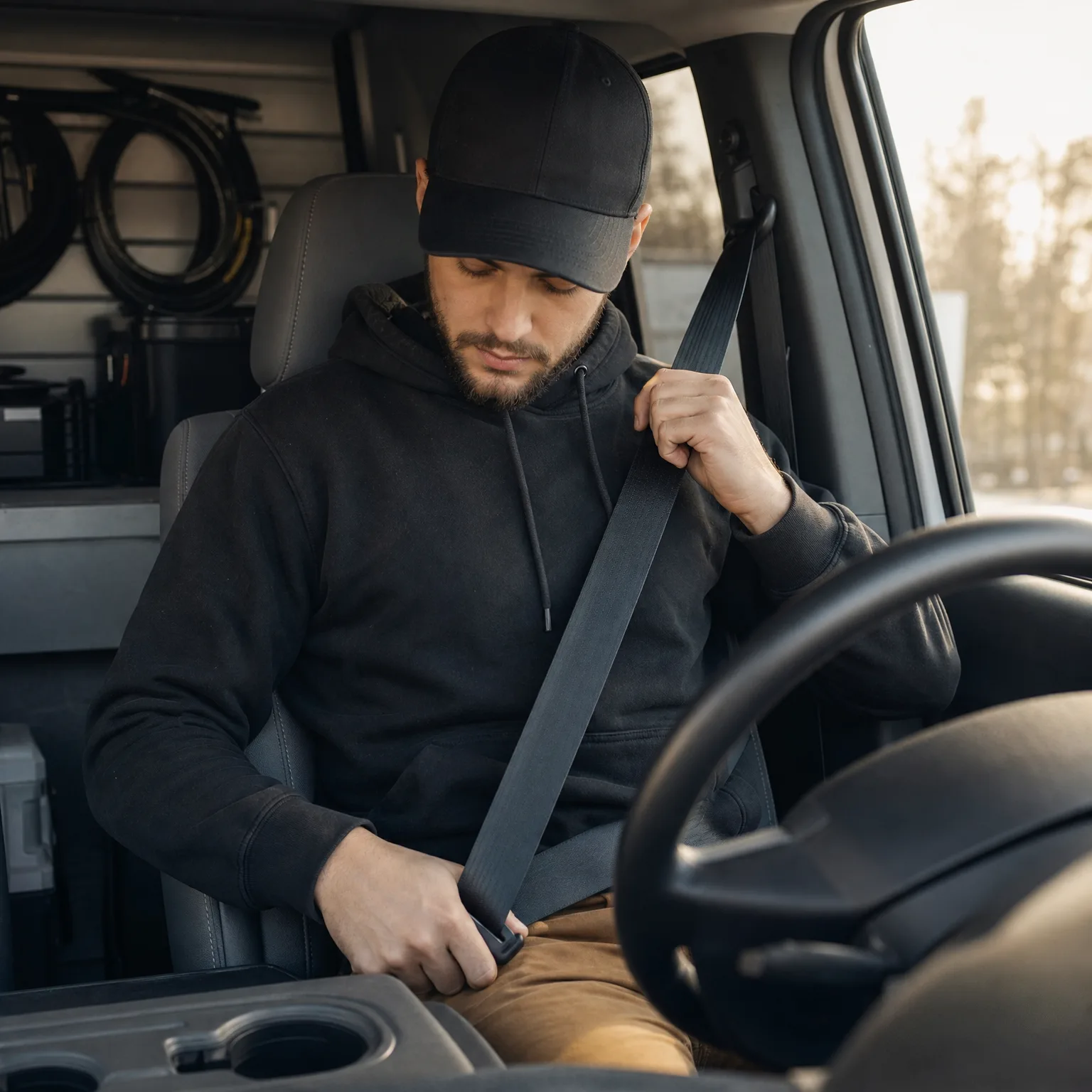
If your suspension stems from DUI, the court will require ignition interlock device installation as a condition of granting restricted driving privileges. South Dakota's ignition interlock program under SDCL 32-23-109 applies to DUI offenders seeking restricted licenses — the IID is not optional. The device prevents your vehicle from starting if it detects alcohol on your breath and logs every test for monthly monitoring reports.
You pay for IID installation (typically $75 to $150), monthly monitoring fees ($60 to $100), and periodic calibration visits. These costs stack on top of SR-22 insurance premiums, court filing fees, and reinstatement fees. A first-offense DUI typically requires a 30-day hard suspension before you can petition for restricted privileges — repeat offenders face longer waiting periods and may be categorically ineligible depending on conviction history.
The restricted license issued after IID installation limits you to driving IID-equipped vehicles only. If you drive a non-equipped vehicle — even in an emergency — the court revokes your restricted privileges immediately and you serve the remainder of your suspension with no driving at all. IID violation reports submitted by the monitoring vendor trigger the same consequence.
3 years
SR-22 Filing Duration After DUI
South Dakota requires SR-22 filing for 3 years following DUI conviction, measured from the date you file — not the date of conviction. The filing requirement runs parallel to your suspension and restricted license period. Letting SR-22 lapse before the 3-year period ends triggers license suspension.
SDCL 32-23 series and SD Division of Motor Vehicles

What Restricted License Insurance Costs in South Dakota
SR-22 filing itself costs $25 to $50 as a one-time or annual fee depending on the carrier. The liability insurance backing that SR-22 is where cost concentrates. South Dakota drivers with DUI suspensions typically pay $140 to $280 per month for minimum liability coverage with SR-22 endorsement — roughly double to triple the clean-record rate for the same coverage.
Carriers writing SR-22 in South Dakota include Geico, Progressive, State Farm, The General, Dairyland, Bristol West, National General, and USAA (for military-eligible drivers). Not all carriers write post-DUI business at competitive rates. Geico and Progressive often quote aggressively in the non-standard tier. The General and Dairyland specialize in high-risk drivers and may approve drivers other carriers decline. Bristol West operates entirely in the non-standard space and writes SR-22 policies across South Dakota's 43-state footprint.
Get SR-22 Coverage Before You Petition the Court
The circuit court will not approve your restricted license petition without proof of SR-22 insurance already in place. This creates a procedural sequencing requirement: secure SR-22 coverage first, obtain the certificate from your carrier, then file your court petition with that certificate attached as an exhibit. Waiting until after the court hearing to shop for insurance delays your restricted license by weeks.
Request quotes from at least three carriers writing SR-22 in South Dakota. Compare monthly premiums, down payment requirements, and payment plans — some carriers offer monthly billing with no down payment; others require 20% to 30% upfront. Once you select a carrier and pay your first premium, the carrier files SR-22 electronically with the South Dakota Division of Motor Vehicles and mails you a certificate within 1 to 3 business days. Bring that certificate to your court hearing as proof you meet the insurance condition.
How to Petition for a Restricted License in South Dakota
Start by obtaining a certified copy of your suspension order from the SD Division of Motor Vehicles. You'll need proof of employment or essential need — typically an employer letter on company letterhead stating your work address, shift hours, and confirmation that no alternative transportation exists. For school or medical purposes, similar documentation from the institution or provider is required. If your suspension stems from DUI, you must also provide an SR-22 certificate of insurance before the court will consider your petition. The SR-22 filing signals to the court that you carry liability coverage meeting South Dakota's $25,000 per person / $50,000 per accident / $25,000 property damage minimums.
File your petition with the circuit court clerk in the county where you reside or where the original case was heard. Court filing fees vary by county but typically range from $50 to $150. The court schedules a hearing date — processing windows vary by court calendar but expect 2 to 6 weeks from filing to hearing. At the hearing, you present your documentation and explain why restricted driving privileges are necessary. The judge has full discretion to approve or deny. If approved, the court issues an order specifying your allowable driving purposes, hours, and routes. You take that court order to the DMV to have the restriction noted on your license record.
Get Your Free Quote
Get My Restricted License Insurance QuoteFrequently Asked Questions
Can I apply for a restricted license directly at the South Dakota DMV?
No. South Dakota requires you to petition the circuit court for restricted driving privileges under SDCL 32-12-53. The DMV does not administer a hardship license application process. Once the court approves your petition and issues an order, you take that order to the DMV to have the restriction noted on your license record.
How long does it take to get a restricted license in South Dakota?
Processing time depends on the circuit court calendar in your county. From filing your petition to receiving a hearing date typically takes 2 to 6 weeks. If the court approves your petition, the DMV can note the restriction on your record within 1 to 3 business days after you present the court order.
Do I need ignition interlock for a South Dakota restricted license?
Yes, if your suspension stems from DUI. South Dakota requires ignition interlock device installation as a condition of restricted driving privileges for DUI offenders under SDCL 32-23-109. The court will specify IID as a condition in your restricted license order. Non-DUI suspensions typically do not require IID unless the court orders it for other reasons.
What happens if I drive outside my restricted license hours in South Dakota?
The court revokes your restricted driving privileges immediately. Violating the hours, routes, or purposes specified in your court order triggers automatic revocation in most South Dakota counties. You serve the remainder of your original suspension period with no driving privileges at all.
How much does SR-22 insurance cost in South Dakota after DUI?
Drivers with DUI suspensions typically pay $140 to $280 per month for minimum liability coverage with SR-22 endorsement in South Dakota. Rates vary by age, county, driving history, and carrier. The SR-22 filing fee itself is $25 to $50; the liability insurance backing it is where cost concentrates.
Can I get a restricted license for a non-DUI suspension in South Dakota?
Yes, if the court finds you have essential need. South Dakota's restricted license program applies to various suspension triggers — DUI, points accumulation, and other qualifying causes. The circuit court has discretion to approve restricted driving privileges for employment, school, or medical purposes regardless of what triggered your suspension.
Which carriers write SR-22 insurance in South Dakota?
Geico, Progressive, State Farm, The General, Dairyland, Bristol West, National General, and USAA write SR-22 policies in South Dakota. Not all write post-DUI business at competitive rates. The General and Dairyland specialize in high-risk drivers. Geico and Progressive often quote aggressively in the non-standard tier.