
Cheapest Alabama Restricted License Insurance — Carriers & Costs
Free to compare
Alabama Restricted License SR-22 Filing Before Court Petition
Your Alabama circuit court restricted license petition is scheduled, your employer documentation is ready, and the judge's clerk told you to bring proof of SR-22 filing to the hearing. You call your current carrier and learn they won't file SR-22 for DUI-suspended drivers. You now have 8 days to find a carrier that will write the policy, issue the SR-22 certificate, and transmit it to ALEA before your court date — or reschedule and lose another 45 days waiting for the next available hearing slot.
Alabama's restricted license process runs through circuit court petition under Alabama Code § 32-5A-191, not through ALEA administrative channels. The court will not grant a restricted license without verified SR-22 filing already on record with ALEA. This means SR-22 must be in place before the petition hearing, not after approval. Carriers that delay certificate issuance by 5–7 business days miss the court deadline, forcing rescheduling and extending the hard suspension period by weeks.
“Alabama circuit courts verify ALEA SR-22 records during the hearing — if the system shows no active filing, the petition is continued 30–45 days.”

Get Insured on Your Restricted License
Get My Restricted License Insurance Quote$275 + $200
Alabama DUI Reinstatement Fee
ALEA charges a $275 base reinstatement fee plus a separate $200 DUI-specific fee for all alcohol-related revocations, per current ALEA fee schedules. These fees are due at reinstatement after the restricted license period ends, not at restricted license issuance.
Alabama Law Enforcement Agency Driver License Division fee schedule
Non-Standard Carriers Write DUI-Suspended Drivers
Standard-tier carriers (Allstate, State Farm, Travelers, Nationwide) typically decline to write new policies for drivers with active DUI suspensions, even when the restricted license pathway is available. Non-standard carriers specialize in high-risk filings and issue SR-22 certificates within 1–3 business days of policy bind. In Alabama, non-standard carriers writing SR-22 for DUI-suspended drivers include Dairyland, The General, GAINSCO, Bristol West, Acceptance, Direct Auto, and Progressive's non-standard division.
Monthly premiums for non-standard SR-22 policies in Alabama range from $95 to $155 for minimum liability coverage ($25,000 bodily injury per person, $50,000 per accident, $25,000 property damage). Drivers with clean records prior to the DUI conviction typically quote closer to $95–$115. Drivers with prior at-fault accidents or additional violations quote $125–$155. These ranges reflect minimum state liability only; adding collision or comprehensive coverage increases premiums by $40–$80 per month depending on vehicle value.
Standard-tier carriers that do write restricted-license drivers (State Farm in select cases, Geico for non-DUI suspensions) quote $10–$25 per month lower than non-standard tier, but approval is inconsistent and processing timelines stretch to 7–10 business days. For court-scheduled petition hearings, non-standard carriers' faster issuance windows outweigh the marginal cost savings of attempting standard-tier approval.
Alabama circuit courts schedule restricted license petition hearings 30–60 days out. SR-22 filing must be verified with ALEA before the hearing date — carriers that delay certificate transmission by a week force rescheduling.



Ignition Interlock Requirement Adds Monthly Costs
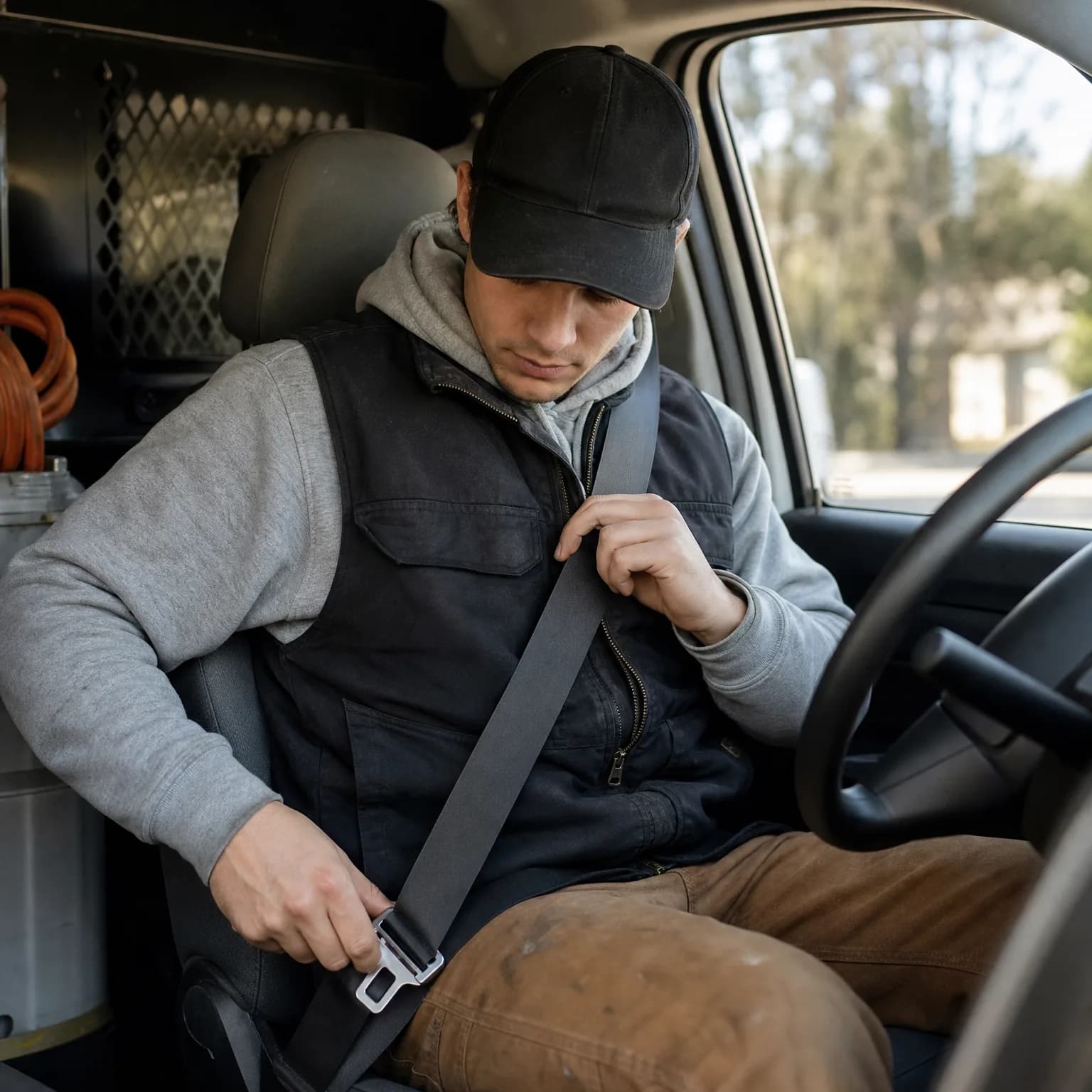
Alabama Code § 32-5A-191 requires ignition interlock device (IID) installation for all restricted licenses issued after DUI conviction. The IID must be installed before the restricted license is granted and must remain installed for the duration of the restricted driving period, typically 6–12 months for first-offense DUI, longer for repeat offenses. Monthly IID costs in Alabama include installation ($75–$125), monthly monitoring and calibration ($60–$85), and removal ($50–$75).
SR-22 insurance premiums do not include IID costs. The $95–$155 per month non-standard premium estimate covers only liability insurance and SR-22 filing. Adding IID monitoring brings total monthly restricted-license driving costs to $155–$240 for first-offense DUI cases. Carriers do not finance IID installation; the upfront installation fee is due at the time of device installation, before the court will issue the restricted license.
Alabama-approved IID vendors include Intoxalock, LifeSafer, Smart Start, and Guardian Interlock. Monthly monitoring fees vary by vendor and county; urban counties (Jefferson, Madison, Mobile) see lower monthly costs ($60–$70) due to vendor competition, while rural counties quote $75–$85. The circuit court petition must specify the IID vendor; switching vendors mid-restriction requires court approval and resets the monitoring period in some jurisdictions.
3 years
Alabama SR-22 Filing Period
Alabama requires SR-22 filing for 3 years following DUI conviction, measured from the conviction date, not the restricted license issuance date or reinstatement date. The filing must remain active and continuous; a lapse triggers immediate suspension and revokes the restricted license if still in effect.
Alabama Code § 32-7A-7

Restricted License Eligibility and Court Petition Process
Alabama restricted licenses are issued through circuit court petition, not ALEA administrative process. After a DUI conviction, drivers serve a mandatory hard suspension period (90 days for first offense, 1 year for second offense, longer for subsequent offenses) during which no driving is permitted. After the hard suspension period ends, the driver may petition the circuit court in the county of conviction for a restricted license.
The petition requires proof of SR-22 filing, proof of IID installation, proof of employment or essential need (medical appointments, school enrollment, childcare responsibility), and payment of applicable court filing fees (typically $150–$300 depending on county). The court hearing is scheduled 30–60 days from the date of petition filing. Judges have discretion to approve or deny restricted licenses; approval is not automatic even when all documentation is complete. Denials typically cite insufficient proof of hardship, prior restricted license violations, or pending criminal charges unrelated to the DUI.
Approved restricted licenses limit driving to court-defined routes and hours. Typical restrictions include home-to-work, home-to-school, home-to-medical-appointments, and home-to-IID-calibration-appointments only. Driving outside approved routes or hours violates the restriction, triggers immediate revocation, and extends the full suspension period by the remaining restricted license duration. The restricted license is not a provisional return to unrestricted driving; it is a court-supervised permission to drive for specific named purposes only.
Compare Non-Standard Carriers Before Court Petition
Dairyland, The General, and GAINSCO consistently write Alabama DUI-suspended drivers and issue SR-22 certificates within 2 business days. Bristol West, Acceptance, and Direct Auto also write this tier but processing timelines vary by county and underwriting load; quotes from these carriers should be bound 7–10 days before the court date to allow processing margin. Progressive's non-standard division writes select Alabama DUI cases but requires manual underwriting review, which adds 5–7 days to certificate issuance.
Standard-tier State Farm agents occasionally write restricted-license drivers with clean records prior to the DUI, but approval is inconsistent across Alabama offices and certificate issuance stretches to 7–10 business days. Geico writes non-DUI suspensions (points accumulation, insurance lapse) but declines most DUI-suspended drivers at the quoting stage. For court-scheduled petition hearings, non-standard carriers' reliable 1–3 day issuance windows and consistent approval for DUI cases make them the safer path than attempting standard-tier approval and risking denial 5 days before the hearing.
Quotes vary by $30–$50 per month across non-standard carriers for identical coverage. Request quotes from at least three carriers 10–14 days before the court petition date, bind the lowest-cost quote that confirms 1–3 day certificate issuance, and verify with ALEA's OIVS system 2 days before the hearing that the SR-22 filing is active. Missing the court date because the carrier delayed certificate transmission costs 30–45 days of continued hard suspension waiting for the next hearing slot.
SR-22 Filing Timeline for Court Petition
Non-standard carriers that specialize in SR-22 filings (Dairyland, The General, GAINSCO, Direct Auto) issue certificates within 1–3 business days of policy effective date and transmit electronically to ALEA the same day. Standard-tier carriers that occasionally approve restricted-license cases (State Farm, Geico) process SR-22 filings in 5–7 business days and may require manual underwriting review before certificate issuance, which adds another 3–5 days. If your petition hearing is scheduled 10 days out, a standard-tier carrier's 12-day total processing window misses the deadline.
The SR-22 certificate must be on file with ALEA's Online Insurance Verification System (OIVS) before the court date. Judges verify ALEA records during the hearing. If the system shows no active SR-22 filing, the petition is continued to the next available hearing slot, typically 30–45 days later. Binding a non-standard policy 5–7 days before the hearing date leaves margin for transmission delays; binding 2–3 days before risks electronic filing lag and forces rescheduling.
Get Your Free Quote
Get My Restricted License Insurance QuoteFrequently Asked Questions
How much does SR-22 insurance cost in Alabama for a restricted license?
Non-standard SR-22 insurance for Alabama restricted license drivers costs $95–$155 per month for minimum state liability coverage. Drivers with clean records prior to the DUI quote $95–$115; drivers with prior accidents or additional violations quote $125–$155. These premiums do not include ignition interlock device monitoring costs ($60–$85/month) required for Alabama restricted licenses.
Which carriers write SR-22 for Alabama DUI-suspended drivers?
Dairyland, The General, GAINSCO, Bristol West, Acceptance, Direct Auto, and Progressive's non-standard division write SR-22 policies for Alabama DUI-suspended drivers. Standard-tier carriers (State Farm, Allstate, Nationwide, Travelers) typically decline new policies for active DUI suspensions. Non-standard carriers issue SR-22 certificates within 1–3 business days, faster than standard-tier carriers' 7–10 day processing windows.
How long does Alabama require SR-22 filing after a DUI?
Alabama requires SR-22 filing for 3 years following DUI conviction, measured from the conviction date under Alabama Code § 32-7A-7. The filing must remain active and continuous throughout the 3-year period. A lapse in SR-22 coverage triggers immediate license suspension and revokes any active restricted license.
Do I need SR-22 before my Alabama restricted license court hearing?
Yes. Alabama circuit courts require verified SR-22 filing on record with ALEA before the restricted license petition hearing. The SR-22 certificate must be transmitted to ALEA's Online Insurance Verification System and show as active when the judge checks records during the hearing. If no active filing appears, the petition is continued to the next hearing slot, typically 30–45 days later.
Can I get a restricted license immediately after an Alabama DUI?
No. Alabama requires a mandatory hard suspension period before restricted license eligibility: 90 days for first-offense DUI, 1 year for second offense, longer for subsequent offenses. No driving is permitted during the hard suspension. After the hard suspension ends, you may petition the circuit court for a restricted license, which requires SR-22 filing and ignition interlock device installation.
How much does an ignition interlock device cost in Alabama?
Alabama ignition interlock devices cost $75–$125 for installation, $60–$85 per month for monitoring and calibration, and $50–$75 for removal. Total monthly costs (insurance plus IID) for Alabama restricted license drivers range from $155 to $240. Installation fees are due upfront; carriers do not finance IID costs.
What happens if my SR-22 lapses during my Alabama restricted license period?
SR-22 lapse during an active Alabama restricted license period triggers immediate suspension and revokes the restricted license. Alabama's Online Insurance Verification System (OIVS) notifies ALEA when carriers cancel SR-22 policies. The restricted license is voided, the hard suspension resumes for the remaining restricted license duration, and reinstatement requires a new circuit court petition with proof of continuous SR-22 filing.