
Cheapest SR-22 for Restricted Use License — New York
Free to compare
You Have the RUL Approval but No Coverage Path
You cleared the New York DMV hurdle — your Restricted Use License application was approved, the ignition interlock device is installed per Leandra's Law, and you have the MV-500 series paperwork in hand. The DMV told you that you need proof of insurance before they will issue the physical license, but when you called the three national carriers you found online, two declined to quote post-DUI risk and one quoted you $420/month with a vague reference to an SR-22 form. New York has not used SR-22 certificates since the 1990s. The system that actually governs your insurance requirement is the Insurance Information and Enforcement System (IIES), and most customer-facing quote tools are not built to handle it correctly.
The IIES framework means your carrier reports coverage to the DMV electronically in real time — no paper filing, no separate certificate, no manual submission. When you buy a policy from a New York-admitted carrier, that carrier transmits policy issuance, cancellation, and lapse notifications directly to the DMV. The problem is that national carriers writing in New York often route post-DUI applicants through their SR-22 underwriting desk because their quoting systems flag DUI as an SR-22 trigger in the other 48 states. You get quoted for a product you do not need, at a price tier designed for a compliance framework that does not exist here. Carriers that understand the New York IIES system and write restricted-use-license risk directly produce meaningfully lower premiums — typically $180–$310/month for liability-only coverage with a post-DUI profile, compared to the $350–$450/month range you see when routed through out-of-state SR-22 desks.
“New York verifies coverage electronically through IIES — there is no SR-22 form, no separate filing fee, and no compliance surcharge if you quote with the right carrier.”

Get Insured on Your Restricted License
Get My Restricted License Insurance Quote$180–$310/mo
NY Post-DUI Liability Premium
Liability-only coverage for a driver holding a Restricted Use License after first-offense DUI, quoted by carriers writing directly in New York's IIES framework. Rates assume minimum state liability limits ($25,000/$50,000/$10,000) plus mandatory PIP and uninsured motorist coverage. Comprehensive or collision coverage raises the range to $290–$480/month depending on vehicle value.
Carrier rate filings, NY Department of Financial Services
New York Abolished SR-22 Three Decades Ago
New York eliminated the SR-22 certificate system in the early 1990s and replaced it with mandatory electronic reporting under Vehicle and Traffic Law §313 and §319. Every carrier licensed to write auto insurance in New York is required to report policy issuance, cancellation, and lapse events to the DMV through the IIES database. The system is continuous and automatic — there is no separate financial responsibility filing for high-risk drivers, no standalone SR-22 form to request, and no separate fee for proof-of-insurance certificates. Your carrier either reports your policy to the DMV electronically or they cannot legally write coverage in New York.
This creates two structural problems for drivers shopping post-DUI coverage. First, national comparison tools and carrier websites are built around the SR-22 framework used in 48 other states. When you enter a DUI conviction into the quote form, the system flags you for SR-22 filing and routes you to an underwriting desk that prices for a compliance product New York does not recognize. Second, many large carriers writing in New York do not actively write Restricted Use License risk — they will issue a standard policy to a post-DUI driver, but they price it as assigned-risk or decline entirely because their underwriting guidelines treat restricted-license holders as uninsurable without manual review. Carriers that specialize in post-suspension and post-DUI risk in New York understand that the DMV is receiving electronic verification regardless of your license status, and they price accordingly.
The reinstatement fee structure in New York is also separate from insurance. The DMV charges a $50 suspension termination fee when you resolve the underlying cause, plus a civil penalty that scales with the violation type. For DUI-related Restricted Use Licenses, you paid the application fee ($25 per current DMV schedules, though this is flagged as low-confidence and should be verified at dmv.ny.gov) and the ignition interlock installation cost upfront. Insurance is the last gate — the DMV will not issue the physical Restricted Use License until IIES shows an active policy tied to your name and vehicle.
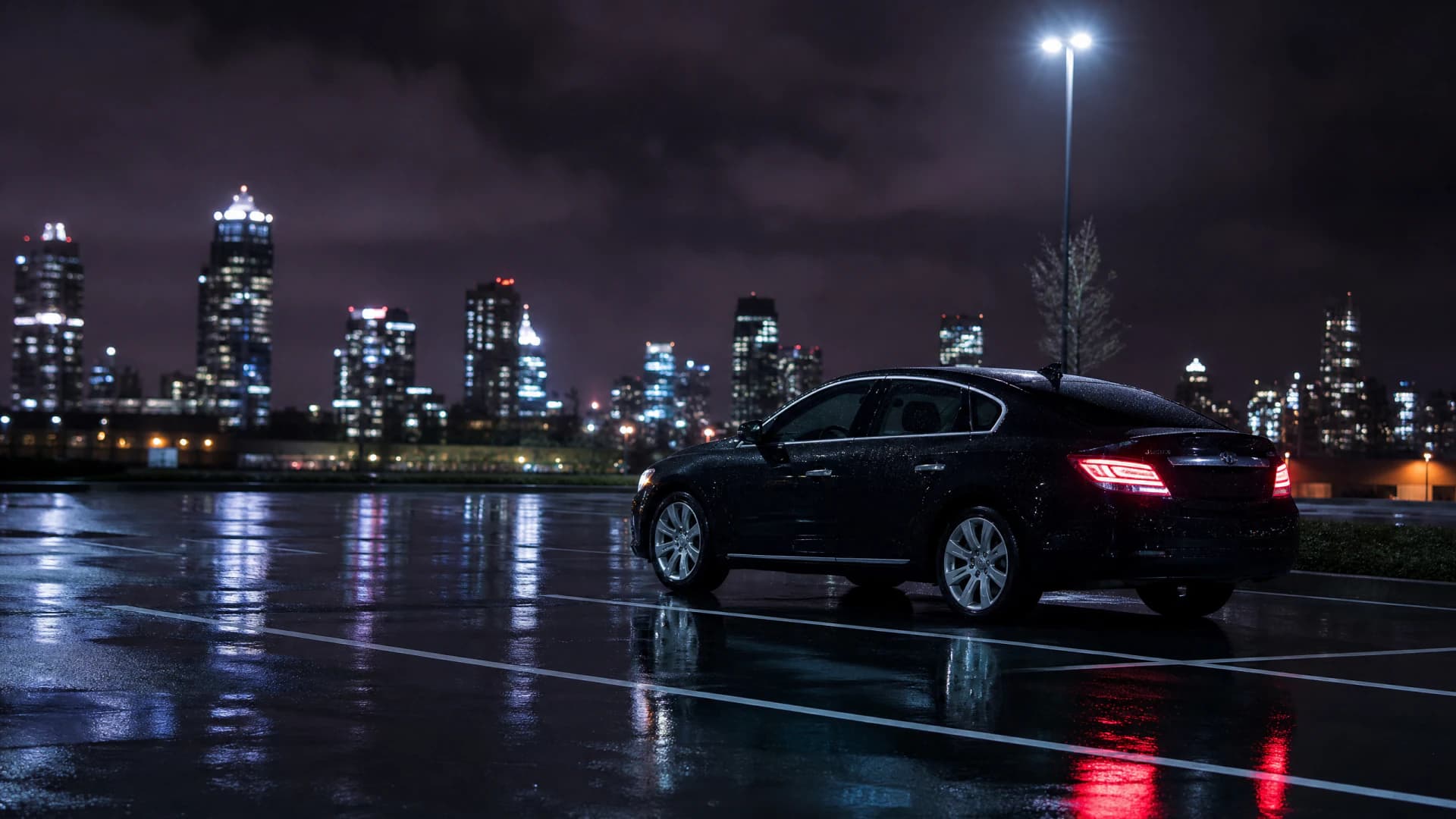
National carriers quote you SR-22 rates because their systems flag DUI as an SR-22 trigger. New York does not use SR-22 forms — you are being priced for a product that does not exist here.
Related Articles





The Ignition Interlock Cost Stack No One Warns You About
Leandra's Law (New York Vehicle and Traffic Law §1198) mandates ignition interlock installation for all DWI and DUI convictions, including as a condition of any Restricted Use License issued during the interlock period. The installation cost runs $75–$150 depending on the vendor and vehicle type. Monthly monitoring and calibration fees add another $60–$100 per month for the entire duration of the restricted license period, which is typically 6 months to 12 months for first-offense DUI depending on your conviction date and the DMV's administrative processing timeline.
The interlock requirement is separate from insurance but compounds the monthly cost stack. A driver paying $220/month for liability coverage plus $75/month for ignition interlock monitoring is carrying $295/month in restricted-driving overhead before adding fuel, registration, or the suspension termination fee you will owe when the restricted period ends and you apply for full license reinstatement. Many drivers approved for Restricted Use Licenses do not budget for the interlock monitoring cost because the DMV approval notice lists the installation fee but not the recurring monthly charge.
Carriers do not surcharge your premium for the ignition interlock device itself — the device is a DMV compliance requirement, not an insurance underwriting factor. However, some carriers treat the presence of an interlock device as a positive risk signal and offer modest premium reductions (5–8% in some cases) because the device mechanically prevents intoxicated operation. Geico and Progressive both recognize interlock devices in their underwriting models; State Farm and Allstate do not adjust premiums for interlock presence in New York.
$60–$100/mo
NY Ignition Interlock Monitoring Cost
Monthly calibration and monitoring fees charged by ignition interlock vendors for devices installed under Leandra's Law. Installation adds a separate $75–$150 upfront cost. The monitoring fee persists for the full duration of the Restricted Use License period, typically 6–12 months for first-offense DUI.
NY DMV ignition interlock vendor fee schedules

Coverage Lapses Trigger Automatic Suspension Under IIES
The IIES system that verifies your coverage also monitors lapses in real time. When your carrier reports a policy cancellation or non-renewal to the DMV, the IIES database flags your name and triggers an automatic suspension notice within 3–5 business days. New York Vehicle and Traffic Law §319 imposes a civil penalty of $8 per day for each day your vehicle remains uninsured, capped at $900 for a 90-day lapse period, plus a $50 civil penalty for failure to surrender plates. If you are holding a Restricted Use License and your coverage lapses, the DMV revokes the restricted license immediately and you revert to fully suspended status. There is no grace period and no manual review — the suspension is automatic once IIES processes the lapse notification.
This makes month-to-month payment reliability critical. Missing a single premium payment triggers a carrier cancellation notice, which the carrier reports to IIES within 24–48 hours. You receive a suspension notice by mail, but the effective suspension date is often backdated to the lapse date reported by the carrier, not the date you receive the notice. Reinstatement after a lapse requires proof of new coverage reported through IIES, payment of the $8/day civil penalty, payment of the $50 suspension termination fee, and in some cases reapplication for the Restricted Use License if the lapse period exceeds 30 days.
Compare Carriers That Write IIES Risk Directly
You need quotes from carriers that write Restricted Use License coverage in New York's IIES framework without routing you through out-of-state SR-22 desks. Geico, Progressive, and National General all quote online and return binding quotes within 10–15 minutes for post-DUI applicants. Bristol West requires broker placement but produces competitive premiums if you are willing to work through an agent. State Farm and Allstate quote Restricted Use License risk but price it as assigned-risk or decline without manual review, which delays the quote process and often produces premiums 30–50% higher than the direct IIES specialists. Start with Geico and Progressive for liability-only coverage at minimum state limits plus mandatory PIP and uninsured motorist. Add comprehensive or collision only if your vehicle's book value exceeds $8,000 — restricted-license drivers holding older vehicles see better monthly cost outcomes with liability-only coverage and self-insuring collision risk.
Carriers Writing Restricted Use License Risk Directly
Geico, Progressive, and National General write post-DUI risk in New York without routing you through SR-22 desks because they underwrite directly in the IIES framework. Geico quotes liability-only coverage for Restricted Use License holders at approximately $200–$285/month depending on county and prior driving history. Progressive prices similarly, typically $190–$310/month for minimum liability plus mandatory PIP and uninsured motorist coverage. National General specializes in non-standard auto risk and quotes restricted-license holders in the $180–$295/month range for liability-only. All three carriers understand that New York verifies coverage electronically and price the policy as standard post-DUI risk, not as an SR-22 filing surcharge.
Bristol West writes post-DUI and restricted-license risk in New York but requires broker placement — you cannot quote directly online. Broker-placed coverage through Bristol West typically runs $210–$340/month for liability-only, with the broker fee absorbed into the premium or charged separately depending on the agency relationship. State Farm and Allstate write in New York but treat Restricted Use License applicants as assigned-risk or decline coverage without manual underwriting review, which adds 10–15 business days to the quote process and often produces premiums in the $350–$450/month range. USAA writes non-owner policies for eligible members but does not actively write restricted-license vehicle coverage post-DUI. If you own a vehicle and need coverage tied to that vehicle for IIES reporting, USAA will not quote you in this scenario.
Get Your Free Quote
Get My Restricted License Insurance QuoteFrequently Asked Questions
Does New York require SR-22 filing for a Restricted Use License?
No. New York eliminated SR-22 certificates in the 1990s and replaced them with the Insurance Information and Enforcement System (IIES), which verifies coverage electronically. Every carrier licensed in New York reports policy issuance, cancellation, and lapse events to the DMV automatically. There is no separate SR-22 form to request, no filing fee, and no compliance certificate to carry.
How much does Restricted Use License insurance cost in New York after a DUI?
Liability-only coverage for a Restricted Use License holder after first-offense DUI typically costs $180–$310/month with carriers writing directly in New York's IIES framework. Rates assume minimum state liability limits ($25,000/$50,000/$10,000) plus mandatory PIP and uninsured motorist coverage. Adding comprehensive or collision raises premiums to $290–$480/month depending on vehicle value and deductible selections.
Which carriers write Restricted Use License coverage in New York?
Geico, Progressive, and National General write post-DUI and Restricted Use License coverage directly in New York without routing applicants through SR-22 desks. Bristol West writes restricted-license risk but requires broker placement. State Farm and Allstate write in New York but treat restricted-license applicants as assigned-risk or decline coverage without manual underwriting review, which delays quotes and often produces higher premiums.
What happens if my coverage lapses while I hold a Restricted Use License?
Your carrier reports the lapse to the DMV through IIES within 24–48 hours, triggering automatic suspension of your Restricted Use License. New York imposes a civil penalty of $8 per day for each uninsured day (capped at $900 for 90 days) plus a $50 suspension termination fee. Reinstatement requires proof of new coverage, payment of all penalties, and in some cases reapplication for the Restricted Use License if the lapse exceeds 30 days.
Do I need to tell my carrier I have a Restricted Use License?
Yes. When you apply for coverage, disclose that you hold a Restricted Use License and provide the DMV paperwork confirming your approval. The carrier needs to report the policy to IIES with your correct license status so the DMV can verify coverage and issue the physical Restricted Use License. If you omit this information, the DMV may not match the IIES record to your restricted-license application, delaying issuance.
Does ignition interlock installation affect my insurance premium?
The ignition interlock device itself does not increase your premium. Some carriers (Geico and Progressive) treat interlock presence as a positive risk signal and offer modest discounts (5–8%), but most carriers price post-DUI risk the same regardless of whether an interlock is installed. The monthly monitoring cost ($60–$100/month) is separate from your insurance premium and is paid directly to the interlock vendor.
Can I get non-owner SR-22 insurance for a New York Restricted Use License?
Non-owner policies exist in New York but are not called SR-22 policies because New York does not use SR-22 forms. If you do not own a vehicle and need coverage to meet Restricted Use License requirements, you can purchase a non-owner liability policy. However, most Restricted Use Licenses are issued with vehicle-specific restrictions, meaning the DMV requires proof of coverage tied to a specific vehicle registration. Verify with the DMV whether your restricted license allows non-owner coverage before purchasing.